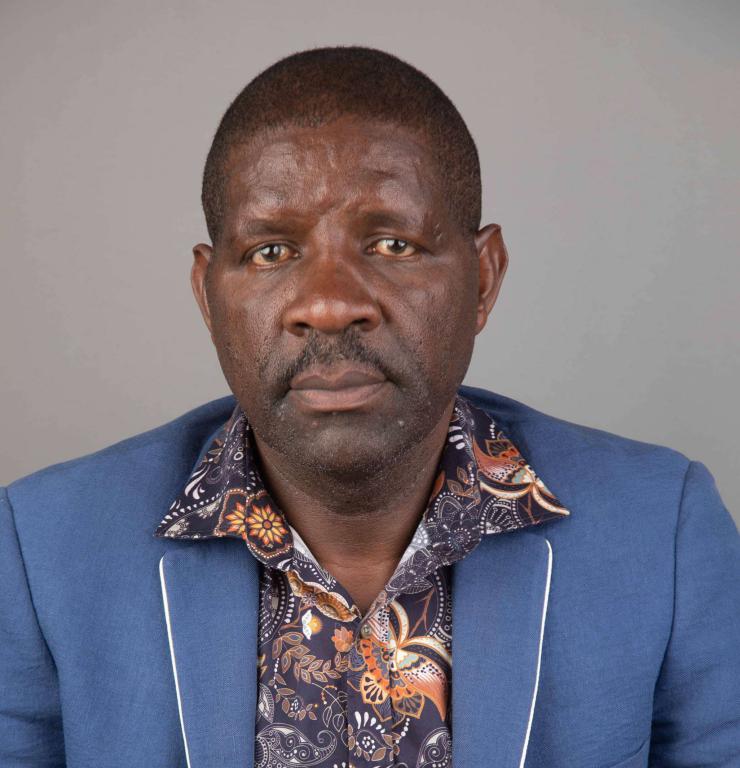

Former Attorney General Justin Muturi has revealed what a United Opposition government would do about the presence of British Army Training Unit Kenya (BATUK) if the opposition takes power after the 2027 General Election.
Muturi, who is also the Democratic Party leader and a member of the United Opposition, says the group would not immediately seek to kick BATUK out of Kenya. Instead, it would push for a major review of the defence agreement between Kenya and the United Kingdom.
His comments come at a time when BATUK has faced growing scrutiny over allegations of misconduct, human rights violations and environmental concerns.
Muturi wants the Kenya-UK deal reviewed
Muturi said a future opposition administration would sit down with Parliament, affected communities, civil society, security experts and British officials to examine the Defence Cooperation Agreement (DCA).
The aim, he explained, would be to create a relationship based on mutual respect, equality and Kenya’s national interests.
Rather than ending the military partnership altogether, Muturi said BATUK could continue operating in Kenya if stronger safeguards were put in place.
Among the issues he wants addressed are environmental protection, human rights and compensation for communities affected by military activities.
He also wants both Kenya and Britain to face clear and equal responsibilities whenever problems arise.
British soldiers should face the law
One of Muturi’s strongest arguments concerns legal accountability.
The former Attorney General said British military personnel accused of committing serious offences in Kenya should not automatically escape accountability because of their nationality or diplomatic arrangements.
He argued that Kenya’s Constitution guarantees equality before the law and that any revised agreement should provide for proper investigations and cooperation with Kenyan authorities.
For Muturi, the issue is not about targeting British soldiers.
Instead, he says Kenya’s defence partnership with Britain should reflect the same principles of justice and accountability expected elsewhere.
Could BATUK be forced out?
Muturi stopped short of saying that a United Opposition government would automatically terminate BATUK’s presence in Kenya.
He said the first option would be negotiations aimed at reaching a fair agreement with Britain.
However, he warned that Kenya would have to consider other options if Britain refused to accept changes that protect Kenyan citizens and respect the country’s Constitution.
His position is that a foreign military presence in Kenya is based on an agreement between sovereign states—not an automatic right.
If negotiations failed, he said Kenya would retain the sovereign authority to decide whether foreign forces should continue operating on its territory.
Muturi questions BATUK licence reversal
The opposition politician also raised questions about the government’s handling of BATUK licences.
According to Muturi, the government cancelled the licences for BATUK military exercises on July 23, 2026, only to issue the necessary approvals again five days later, on July 28.
He wants the government to explain what changed during those five days.
Muturi questioned whether concerns raised by Parliament and affected communities had been addressed, or whether other considerations influenced the decision.
He argued that Kenyans deserve transparency whenever decisions involving foreign military forces and national sovereignty are made.
BATUK debate unlikely to disappear
The controversy surrounding BATUK is therefore likely to remain an important issue as Kenya heads towards the 2027 General Election.
For the United Opposition, Muturi’s position suggests that the debate is not necessarily about choosing between BATUK staying or leaving.
Instead, the bigger question is whether Kenya can renegotiate the relationship to ensure that its citizens, environment and legal system receive the same level of protection expected under any other international partnership.
With the DCA continuing to attract political and public attention, BATUK could become one of the issues on which Kenyans judge the government’s approach to national sovereignty and foreign military cooperation ahead of the 2027 polls.